

Piotr Woźniak at Postglacial Fault Symposium – Finland
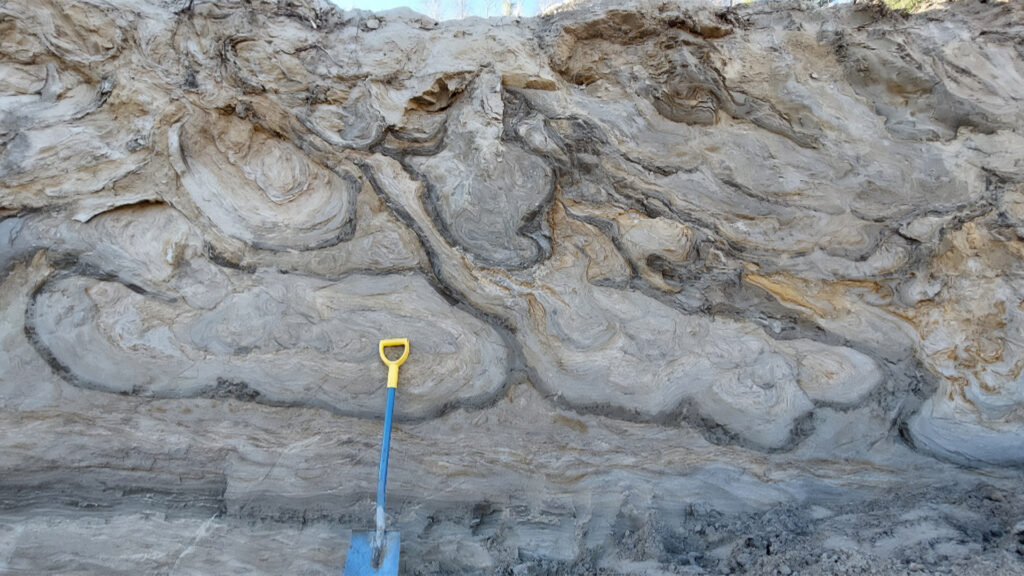
In the last week of August, Piotr Woźniak visited Finland for two purposes. The first was his participation in the recurring PGF (Postglacial Fault) Symposium, held this time in Vaasa and hosted by the Geological Survey of Finland (GTK; pol. służba geologiczna Finlandii). He gave a talk at the conference, co-authored a second contribution, and […]
Special collection in Frontiers in Marine Science – ed. Patryk Sitkiewicz
Patryk Sitkiewicz has been appointed guest editor of the article collection “Restoring Coastlines: Nature-Based and Hybrid Approaches to Coastal Protection and Ecosystem Recovery”, to be published in Frontiers in Marine Science. We warmly invite you to submit abstracts for your proposed manuscripts — the deadline is November 29, 2026. Full manuscripts will be accepted until […]
Summer School in Cluj-Napoca (2026)
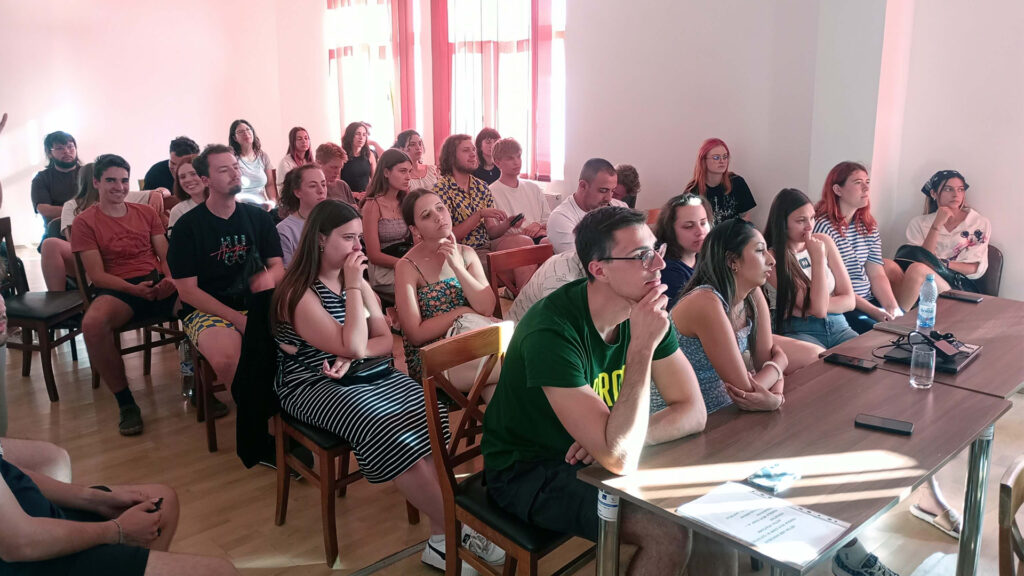
On 6–10 July 2026, Karol Tylmann and our geography and geology students took part in the annual dendrogeomorphology school held in Romania. The school is slowly becoming a tradition – this was already the third edition! The event, which focuses on dendrogeomorphology and geohazards in mountain environments, is organized mainly by researchers from Babeș-Bolyai University […]
Publication in LUP – model of coastal evolution under tourism pressure
Summer is in full swing. Many of us find ourselves wondering: what if we headed to the Hel Peninsula and stayed at one of the campsites there? It is precisely the history of their development that formed the basis for a model of coastal evolution under tourism pressure, as well as for identifying gaps and […]
INQUA Peribaltic 2026 – Łódź
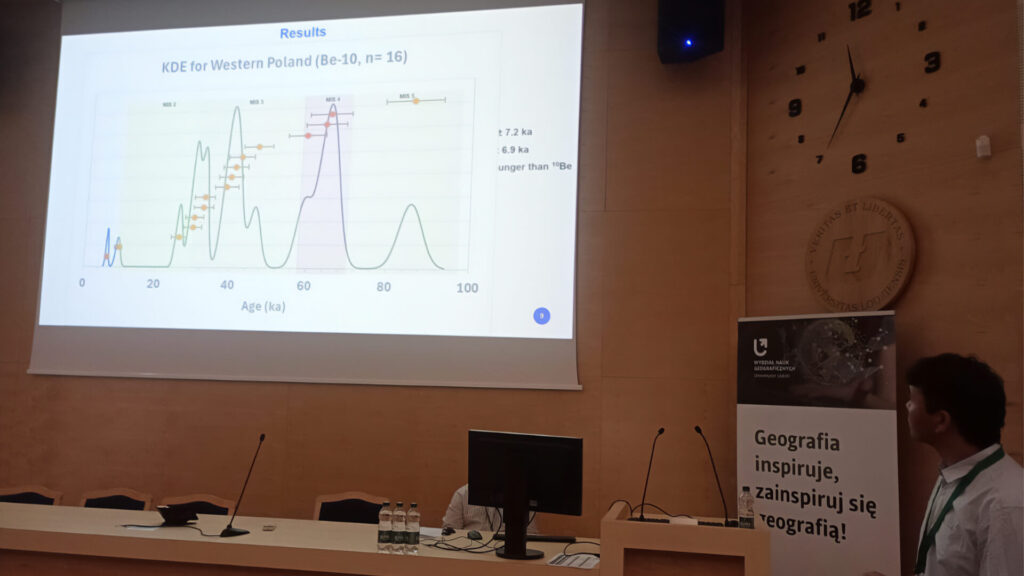
Between fieldwork trips, and despite the changeable — if still summery — weather, we also find time for conference trips! A great opportunity to share our research results recently was the conference of the Peribaltic Group of the International Union for Quaternary Research (INQUA), which is held annually in a different country of the Baltic […]
Shasha Liu’s (Ludong University, China) visit

rom 28 to 30 June, our Department hosted Dr Shasha Liu from Ludong University, located in the city of Yantai on the Yellow Sea coast of China. Dr Liu conducts research on sustainable coastal management, including the development of nature-based solutions. She is part of a team responsible for developing plans and monitoring the effects […]
Bachelor exams 2026
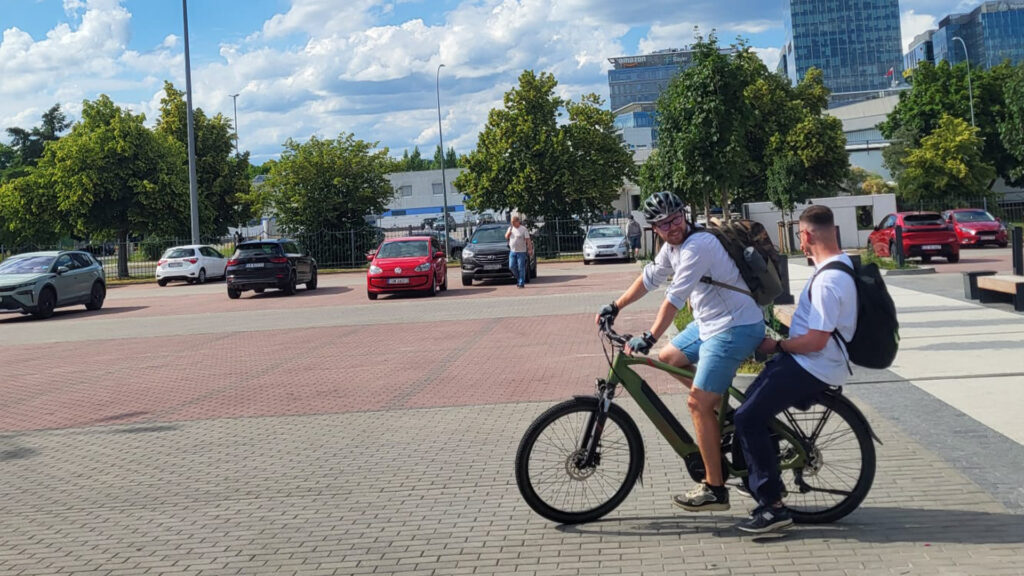
The season of thesis defenses and diploma exams is in full swing. July 2nd was a busy day at our Department. Our bachelor’s graduates were certainly stressed, but every defense ended in success. Thank you all for your cooperation over the past months, and we wish you nothing but success in your academic and professional […]
5th Scientific Conference of Polish Sea Researchers – Damian Moskalewicz
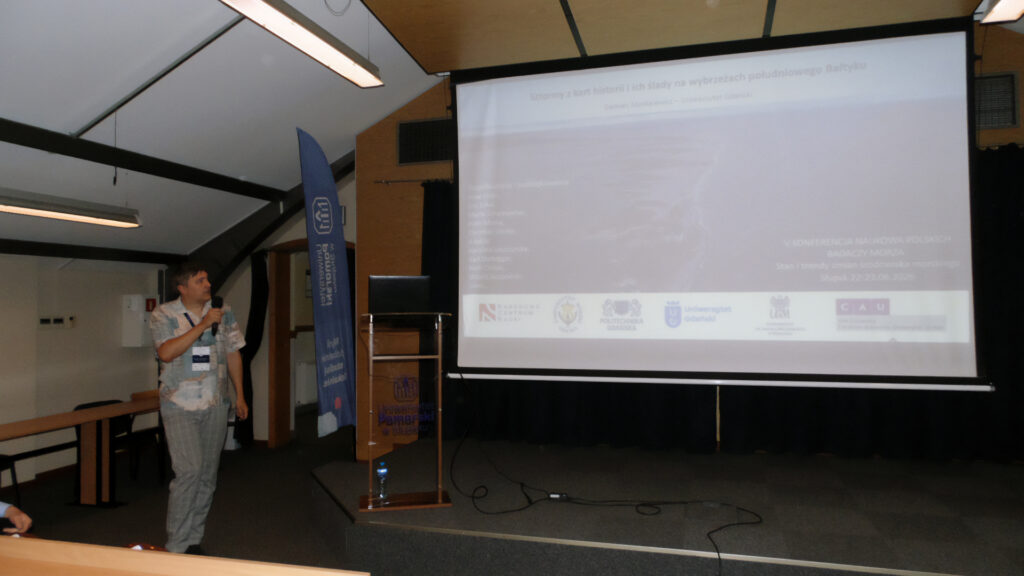
Between 22–24 June, the 5th Scientific Conference of Polish Sea Researchers „State and Trends of Changes in the Marine Environment” (pol. V Konferencja Naukowa Polskich Badaczy Morza „Stan i trendy zmian środowiska morskiego”) was held at the Pomeranian University in Słupsk. Our Department was represented by Damian Moskalewicz, who presented a paper titled “Storms from […]
Study visit – Dawid Siemek
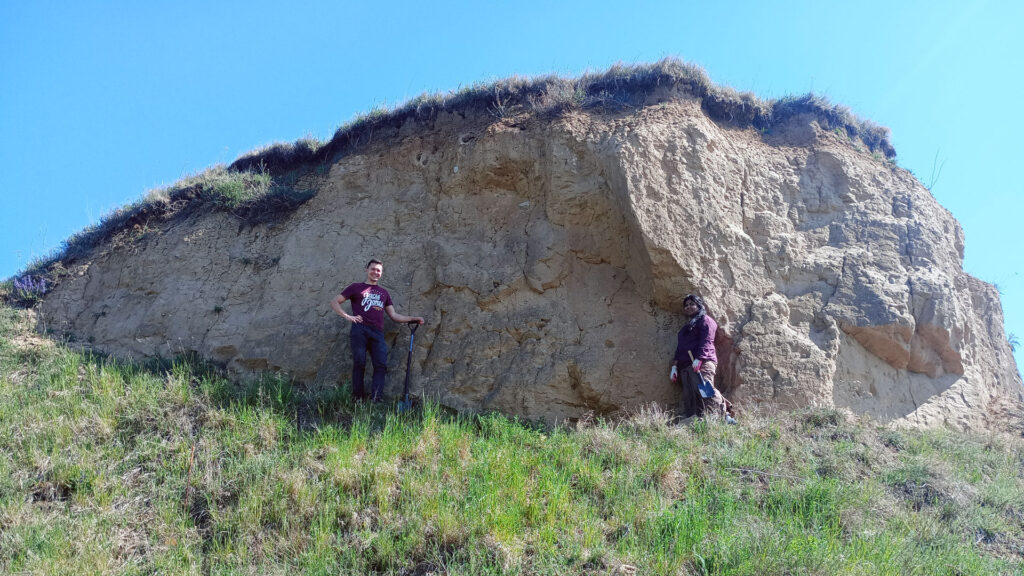
From May 18–22, we hosted Dawid Siemek at the department – a geomorphologist working on his doctoral dissertation at the Institute of Geography and Spatial Management of the Jagiellonian University in Kraków. Under the supervision of Karol Tylmann, Dawid worked both in our laboratories and in the field. Our guest gained valuable knowledge on sampling […]
EGU 2026
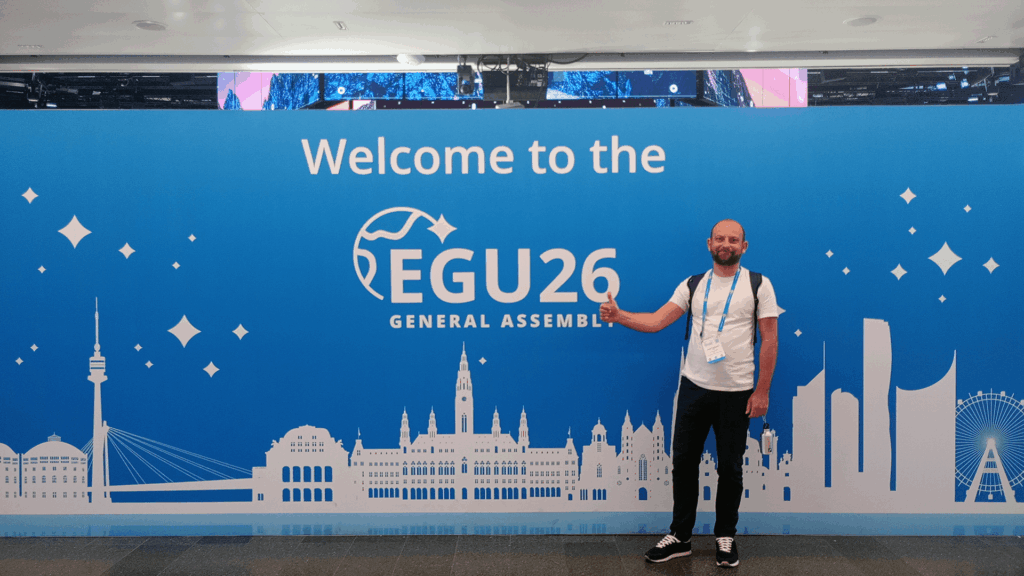
From May 3 to 8, Vienna hosted the annual conference of the European Geosciences Union – EGU General Assembly 2026. Our department was represented by Karol Tylmann, who presented a poster on the legends and myths surrounding Poland’s largest erratic boulders (pol. legendy i mity dotyczące największych głazów narzutowych Polski). The light yet compelling topic […]