

Geological archives are a valuable source of information about past climate and environmental change. Modern research methods make it possible to read the information stored in them in ever greater detail. However, achieving a temporal resolution that allows us to analyze changes occurring on the scale of individual years or decades—time frames that are particularly relevant to the functioning of modern societies—remains a major challenge.
The PAGES (Past Global Changes) PaleoIMAGING working group is a response to this challenge. Its goal is to develop and integrate innovative imaging techniques used in paleoclimate and paleoenvironmental research. This approach makes it possible to achieve the highest possible temporal resolution and to make fuller use of the information preserved in geological archives.
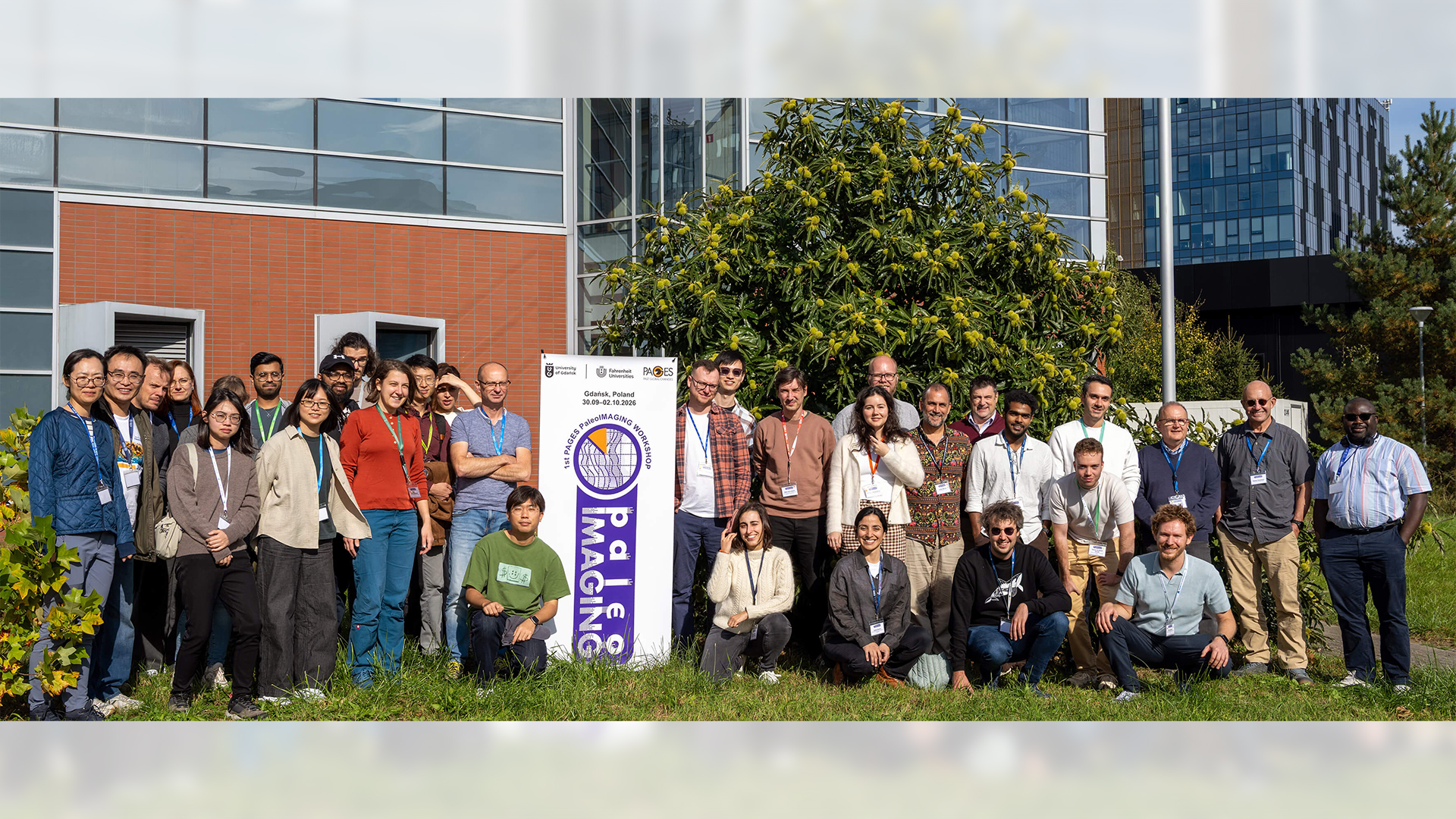
From September 30 to October 2, 2026, the University of Gdańsk (pol. Uniwersytet Gdański) hosted the first meeting of the PaleoIMAGING working group. It brought together 34 scientists from 15 countries, representing various research centers and specializations related to paleoenvironmental reconstructions. The main organizers on the University of Gdańsk side were Wojciech Tylmann and Maurycy Żarczyński from the Department of Geomorphology and Quaternary Geology (pol. Katedra Geomorfologii i Geologii Czwartorzędu). The workshop program focused on integrating the activities of the individual thematic groups and defining the key goals and milestones for the working group’s work over the coming year. A highlight of the meeting was an online plenary lecture by Dr. Kerstin A. Lehnert of the Lamont-Doherty Earth Observatory at Columbia University. In addition, at the request of the group’s board, Maurycy Żarczyński gave a talk on hyperspectral imaging, one of four lectures introducing analytical techniques.
PAGES is an international scientific organization bringing together several thousand researchers from more than 100 countries. For 35 years, it has continuously coordinated efforts to increase knowledge of past environmental change and has promoted the importance of paleoenvironmental research.