About the lab
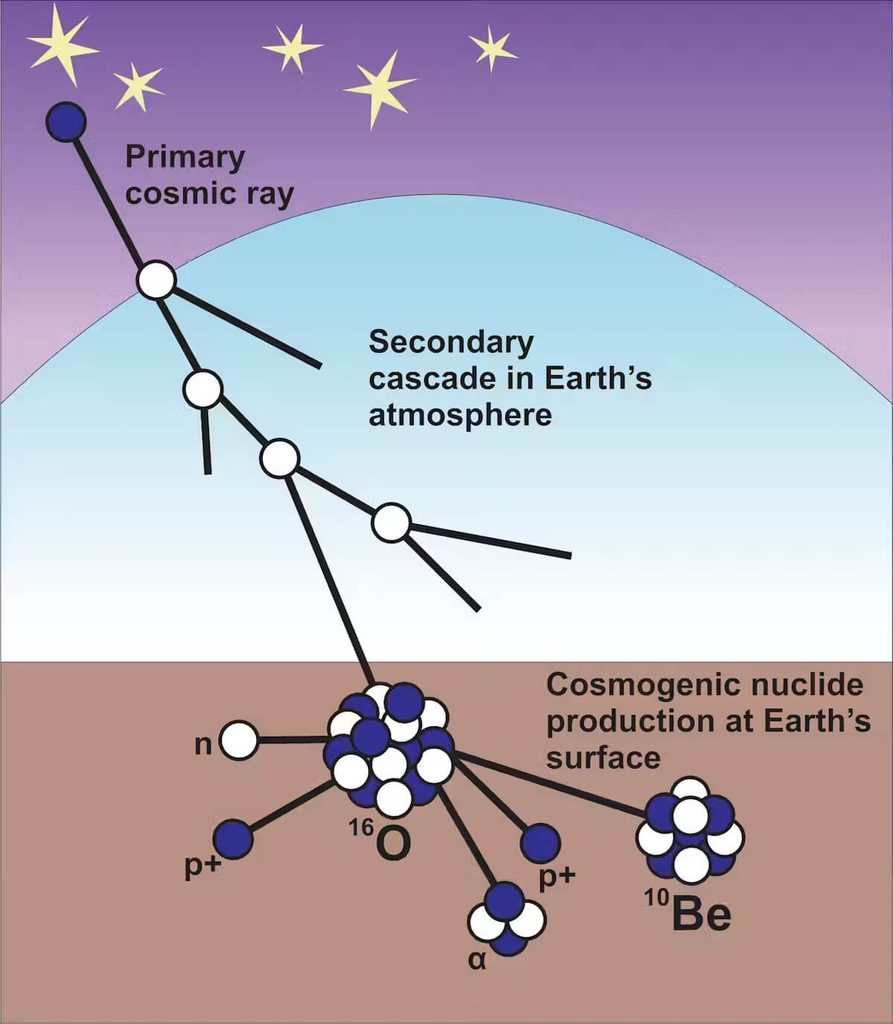
Cosmogenic nuclides are produced in minerals located within the near-surface part of the Earth’s crust as a result of interactions with secondary cosmic rays. Their concentrations can be used to determine how long geological materials have remained at or near the Earth’s surface and, consequently, to reconstruct the rates and history of processes shaping the landscape. Cosmogenic nuclide analysis is widely applied in geomorphology and Quaternary geology. It is used, among other applications, to determine the exposure ages of rock surfaces and boulders, quantify rates of erosion and denudation, investigate weathering processes, sediment transport and deposition, and reconstruct landscape evolution over timescales ranging from hundreds to hundreds of thousands of years. Two of the most used cosmogenic nuclides are beryllium-10 (10Be) and aluminium-26 (26Al), both of which are produced in quartz. Because their production rates are very low (typically only a few to several tens of atoms per gram of quartz per year) sample preparation requires enough highly purified quartz, usually approximately 10-20 g.
Sample preparation begins with crushing the rock or sediment material and separating an appropriate grain-size fraction, typically 0.25–1.0 mm. Quartz is then separated from other minerals using techniques based on differences in their physical and chemical properties. In our laboratory, we use density separation, froth flotation, and multi-stage chemical etching of quartz grains in a 2% HF and HNO₃ solution.
Once enough pure quartz has been obtained, the sample undergoes further chemical processing. The quartz is dissolved in concentrated HF (40%), after which beryllium and aluminium are isolated and purified using ion-exchange chromatography. Finally, beryllium is converted to BeO and aluminium to Al₂O₃. The prepared samples are then analysed for their 10Be/9Be and 26Al/27Al isotopic ratios using Accelerator Mass Spectrometry (AMS) at the ASTER accelerator facility at CEREGE, France.
Equipment
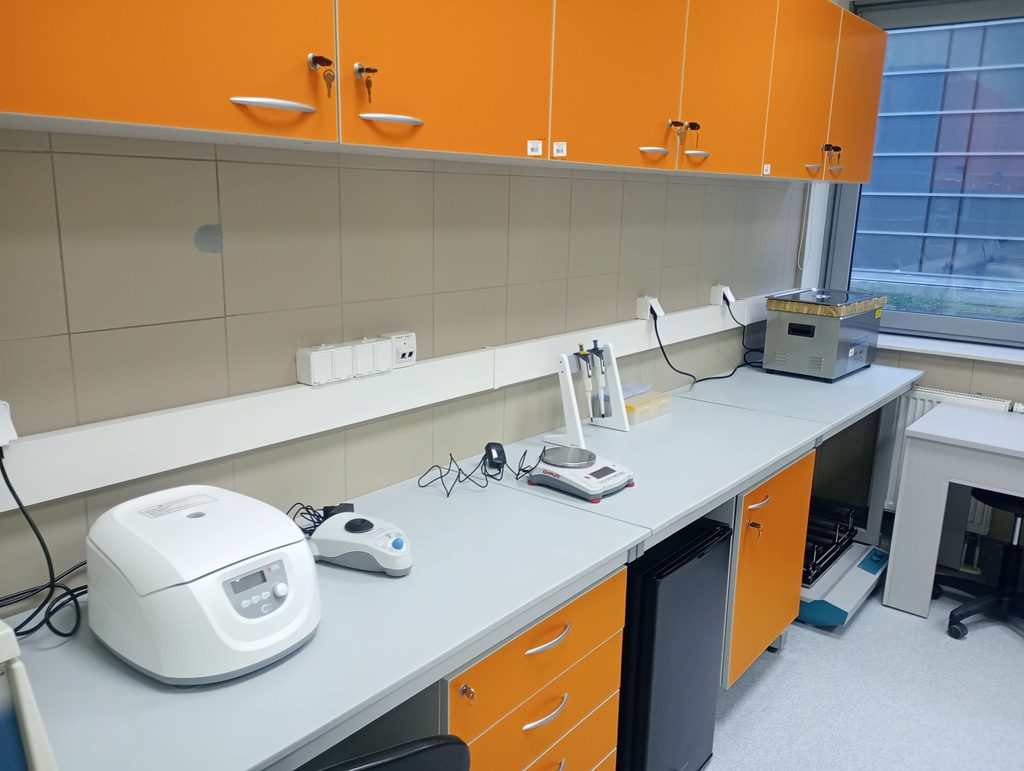
- Table shaker.
- Ultrasonic bath.
- Analytical balance.
- Centrifuge.
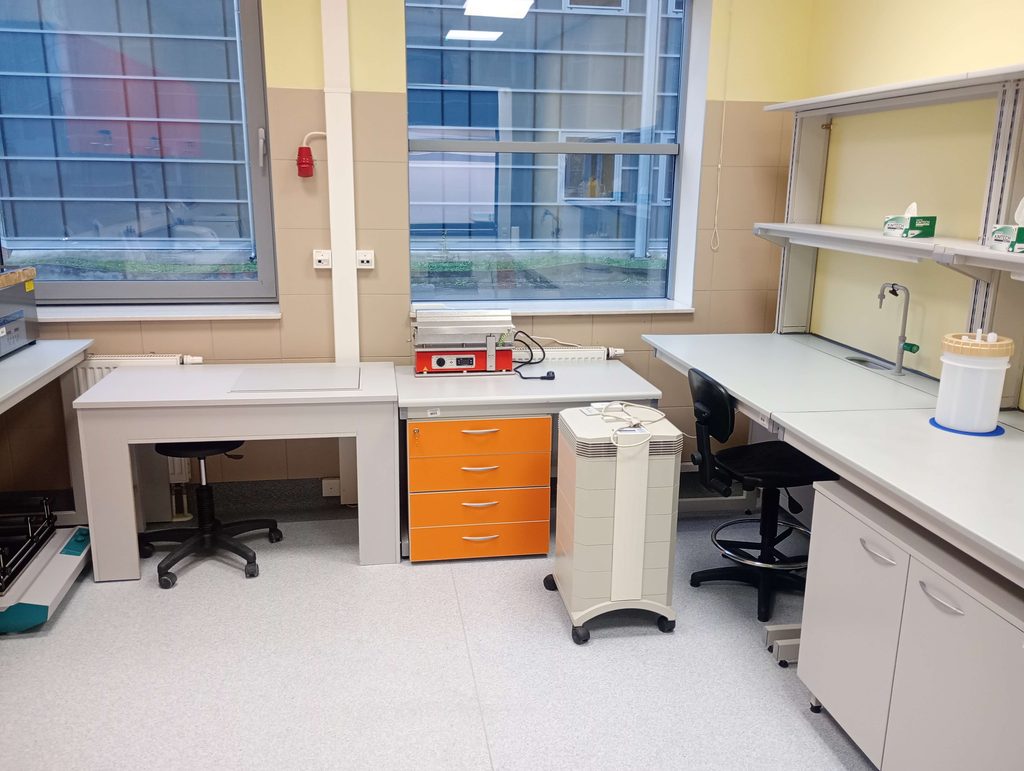
- HF fume hood (Köttermann).
- High-temperature furnace for oxide preparation.
- Hot plates.
- Chromatography columns.
- Ultrapure water Milli-Q® (Merck Millipore).
Contact
Lab manager: Karol Tylmann.