

IPA-IAL symposium – France 2025

From October 6th to 10th, three of our representatives took part in the world’s most important congress dedicated to paleolimnological and limnogeological research. The event, organized by IPA and IAL, was held in the picturesque town of Aix-les-Bains by Lake Bourget in France. Our Department was represented by Alicja Bonk, Wojciech Tylmann, and Maurycy Żarczyński. […]
Short stay at UAM Poznań

Our third-year Geography student, Maria Koch, participated in a short training at Adam Mickiewicz University in Poznań from September 29 to October 3.Under the attentive guidance of Mariusz Bąk from the Institute of Geoecology and Geoinformation, she honed her skills in identifying plant macrofossils preserved in a peat core from the vicinity of Lake Priamy. […]
Conferences in Borucino and Poznań
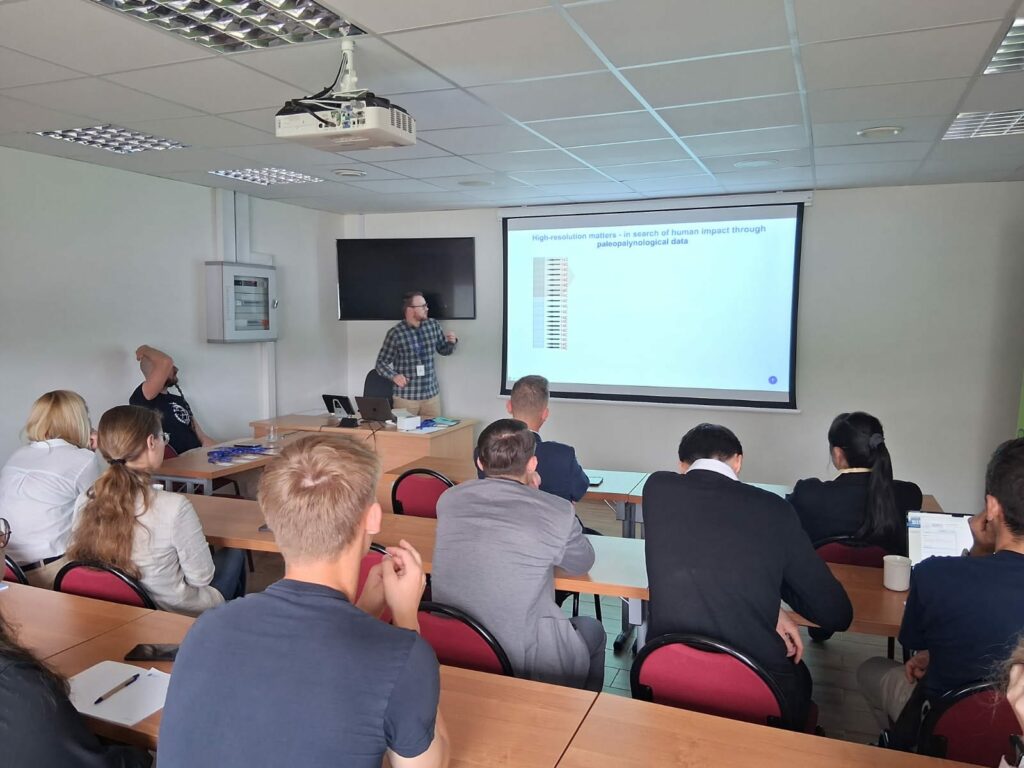
In recent weeks, Sambor Czerwiński participated in two scientific conferences. The first was The Global Water Future: A Holistic Approach to Water Monitoring and Conservation, held on September 17–19, 2025, in Borucino at the Water Monitoring and Conservation Center of our university. Sambor co-organized the event and presented the following talk: Shortly after, he attended […]
Paper in ESR – multiproxy research on peatlands
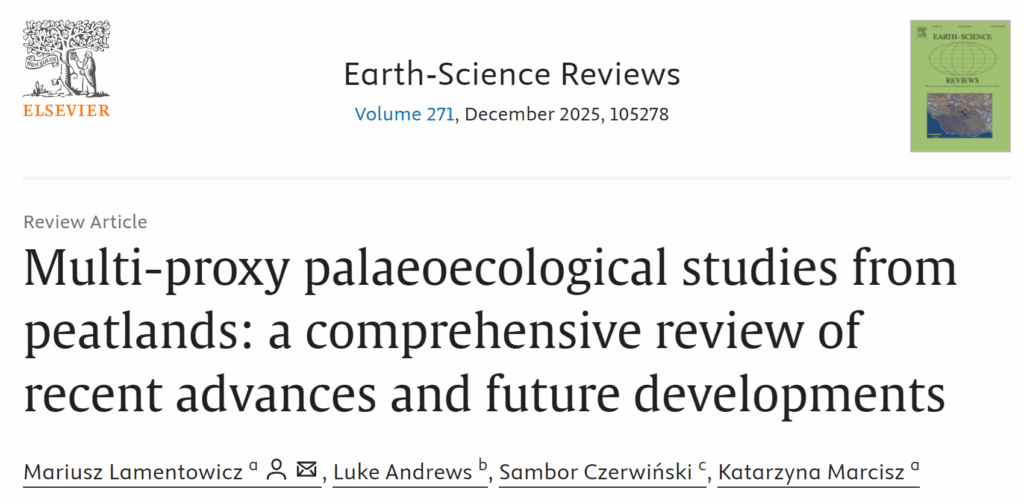
Our colleagues from Instytut Geoekologii i Geoinformacji UAM, in collaboration with Sambor Czerwiński, have undertaken a summary of the latest advances in peatland research using a multiproxy approach – combining various indicators such as pollen, plant macrofossils, testate amoebae, biomarkers, and stable isotopes. Peatlands prove to be exceptional archives of climate change and human impact […]
Paper in QSR – crater lake Alchichica
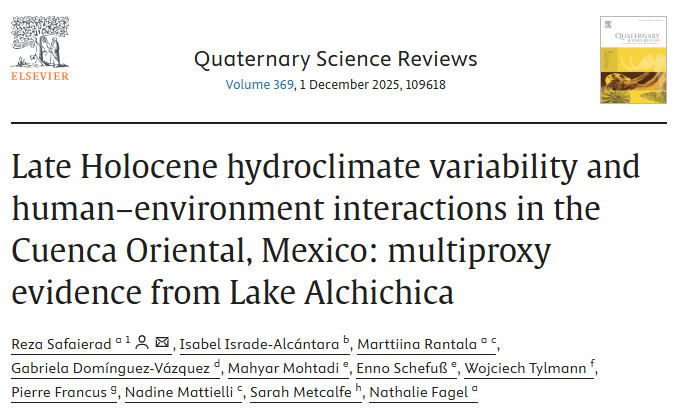
In our latest publication, we return to Mexico, to the semi-arid Cuenca Oriental region, which has long been inhabited by agricultural civilizations. The article presents new data from the Alchichica crater lake, located 18 km from the ancient city of Cantona (600–1050 CE). Isotopic data allowed us to identify three major drought periods: (I) ca. […]
Visit in Spain – Alicja Bonk
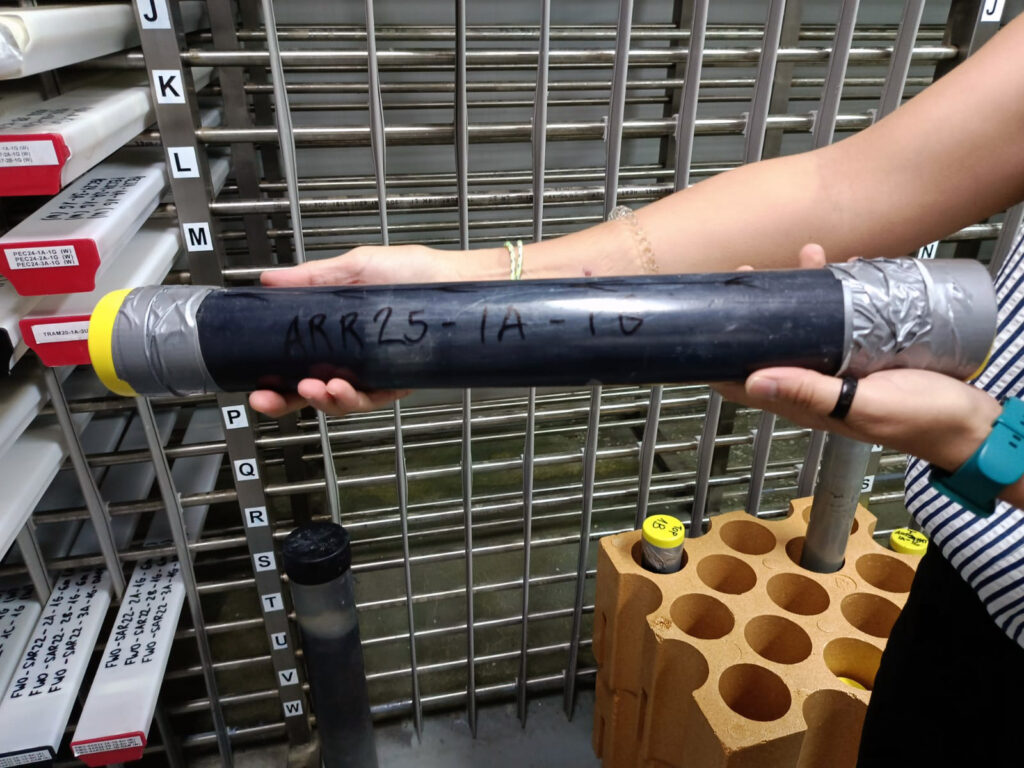
Between September 1st and 4th, Ala Bonk visited Spain, where she met with Pablo Corella from the Museo Nacional de Ciencias Naturales in Madrid and Graciela Gil-Romera from the Instituto Pirenaico de Ecología in Zaragoza. She brought back two short sediment cores from Lake Arreo – the first step toward collaborative research on the history […]
Biebrza NP – fieldwork
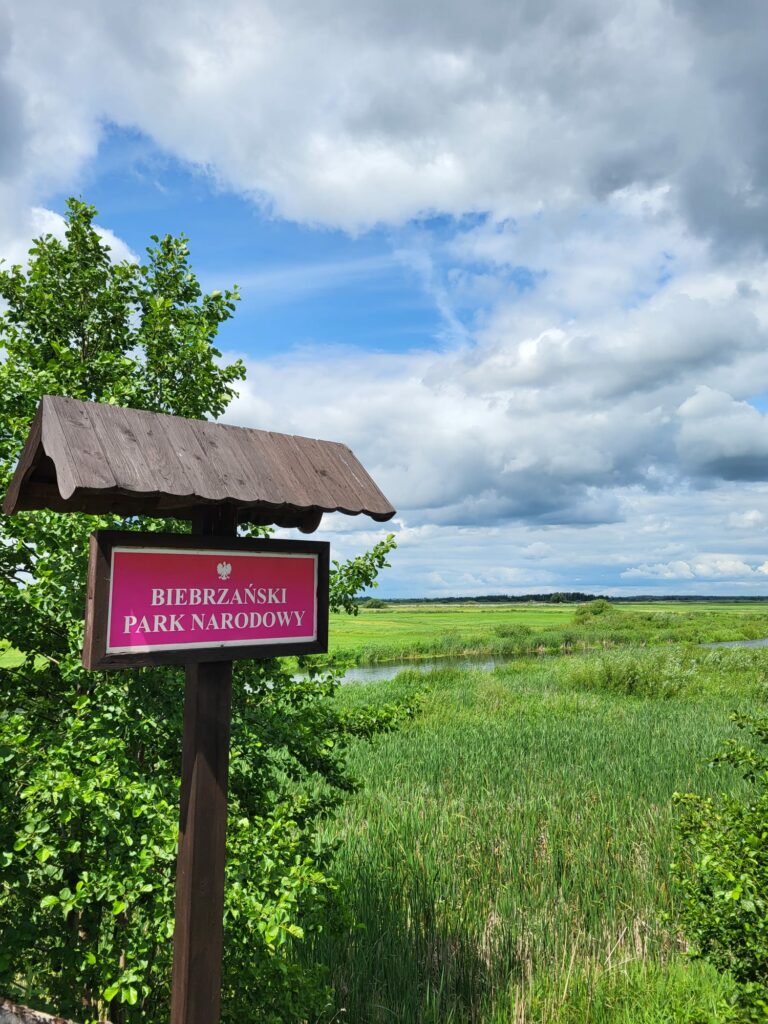
A few days ago, Alicja Bonk, together with our recent graduate Ola Orłowska and future bachelor’s degree recipient Barbara Biały, visited Biebrza National Park. The purpose of the trip was to collect research material following the extensive fire that swept through this unique area in April of this year. We extend our heartfelt thanks to […]
Publication in JoPl – Lake Gorzyńskie chronology
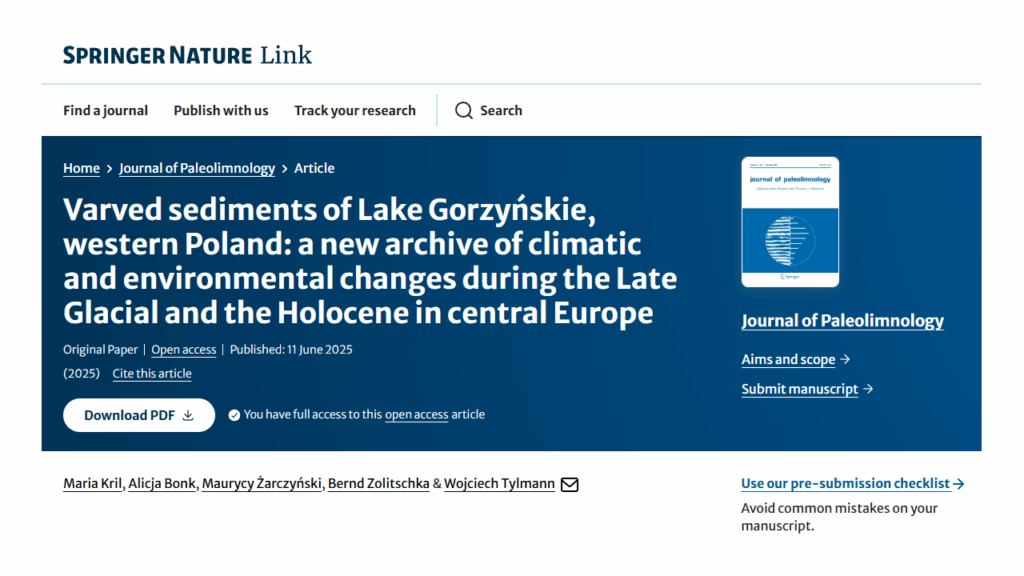
In recent days, the first paper on Lake Gorzyńskie, our new site with varved sediments, was published. In an article in the Journal of Paleolimnology, we present the chronology of the sediments, an initial look at their chemical composition, and our preliminary thoughts on the potential of this unique archive—our record extends back approximately 13,250 […]
XV Paleolimnological Session – Lodz
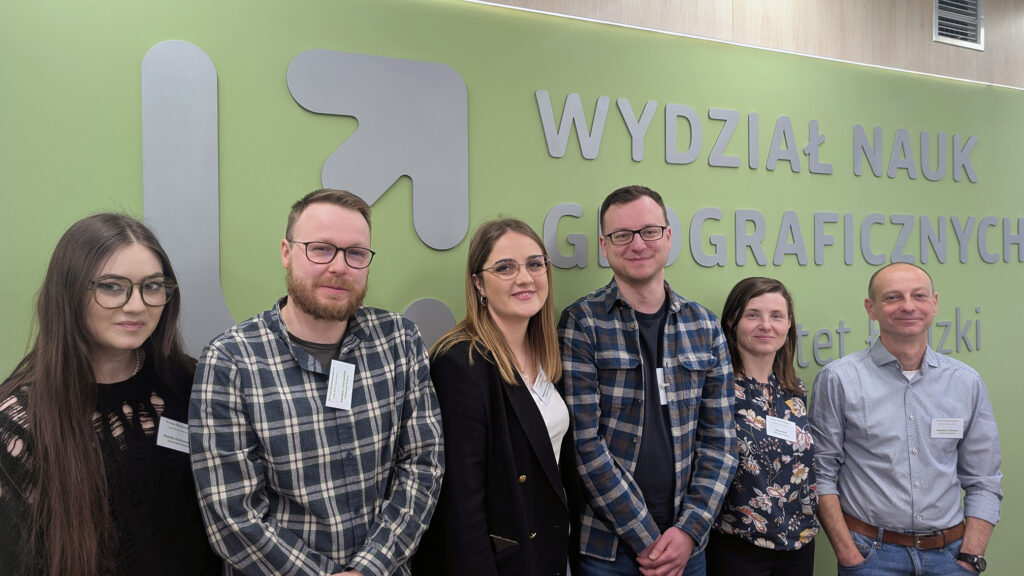
On March 20-21, we held the 15th Paleolimnological Session in Lodz, centered around the theme “Lake-peat geoarchives as a source of knowledge on paleoenvironmental changes.” Our team, representing us at the session, delivered a total of six presentations. The session consistently provides a unique opportunity to connect with colleagues from across the country. Each year, […]
Note on naukaoklimacie.pl

The „Nauka o klimacie” website has published a brief popular science article about our study of Lake Żabińskie and the reconstruction of temperature changes during the Holocene. We encourage you to read it (in Polish) at: https://naukaoklimacie.pl/aktualnosci/zbadali-11-tys-lat-historii-polskiego-jeziora-wniosek-temperatury-nigdy-nie-rosly-tak-szybko This news has also been featured by some of the largest news outlets in Poland, including Onet.pl and […]